What's in My Daypack for Humantay
A working Cusco guide's real daypack for Humantay Lake: the layer system, water, extreme-UV sun protection, soles in cash, and the two items everyone forgets.
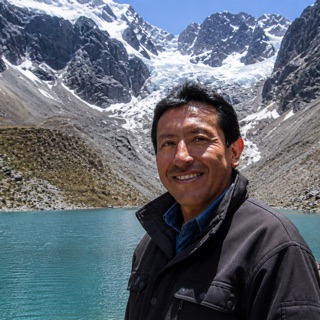 By Carlos Mamani, Humantay Lake tour guide & high-altitude specialist
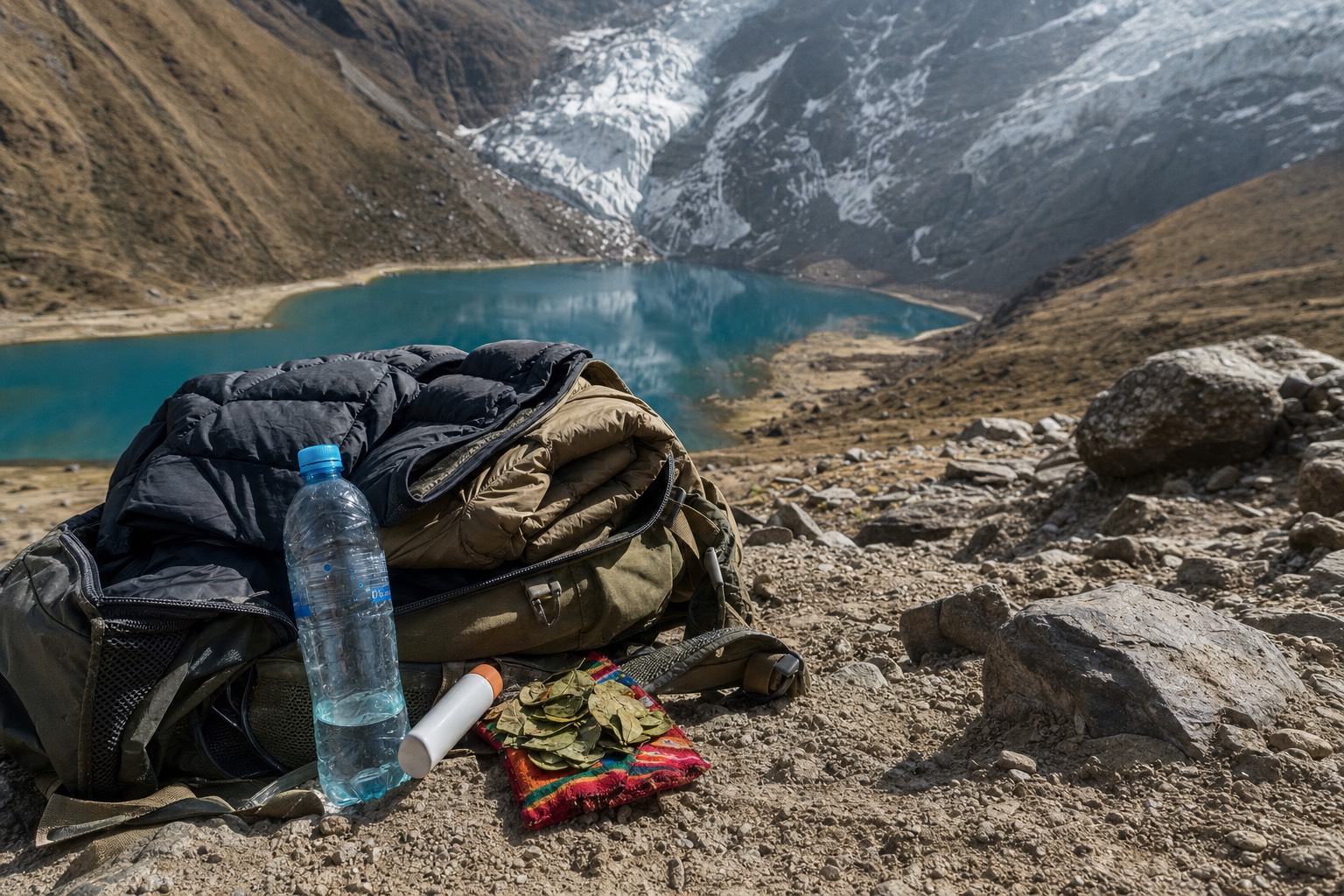
My kitchen table at 2:50 AM: one 22-litre pack, a headlamp with teeth marks from the year I kept it in my mouth while tying boots, and the same dozen items I have packed hundreds of times since I started guiding this valley in 2022. People imagine a mountain guide's bag is full of technical mysteries. It is not. It is full of boring things chosen by cold mornings and burned necks, mine and other people's. Since visitors ask me at least twice a week what to bring, here is the honest inventory, item by item, plus what I deliberately leave in the van.
Booking choice: Discover the day route your layers need to cover, from pickup to lakeshore. Check Humantay Lake dates
Affiliate recommendation · final price and options on GetYourGuide.The layer system that actually survives the day
Three layers beat one thick jacket every time: a wicking base, a warm mid-layer, and a wind and rain shell. The day swings from around freezing at dawn to roughly 10 to 20 C in full sun and back to raw wind at the shore, so you will put on and peel off layers constantly.
The single biggest packing mistake I see is the one-big-coat strategy. Someone boards the van at 3:40 AM in a huge parka, roasts in it at breakfast in Mollepata, ties it around their waist on the climb, and then has nothing adaptable when the wind comes off the glacier at the top. The day is not cold or hot. It is both, several times, in a fixed sequence you can plan for.
My own system: a synthetic base layer that dries fast when the switchbacks make me sweat, a fleece I wear at dawn and at the shore, and a shell that handles both wind and the surprise showers this valley produces even in the dry months. Trousers that move, never jeans; wet denim at altitude is misery with a belt. On my head, a wool hat for the two cold ends of the day and a brimmed sun hat for the middle. The listing for the featured departure tells you the same in fewer words: hiking shoes, warm layers, rain gear.
Here is how the sequence actually plays out against the clock, with the temperatures I genuinely experience up there:
| Moment of the day | Conditions | What I am wearing |
|---|---|---|
| 3:40 AM, Cusco pickup | Cold, dark, ~3,400 m | All three layers, wool hat |
| 6:30 AM, Mollepata breakfast | Cool valley morning | Fleece off, shell on |
| 8:30 AM, trailhead (~3,850 m) | Near freezing to brisk, can be -1 C early | Base plus fleece, gloves |
| 10:00 AM, climbing in sun | Warm work, strong sun | Base layer only, sun hat |
| 10:45 AM, the shore (~4,200 m) | 10 to 20 C but raw glacier wind | Fleece and shell back on |
| 1:30 PM, walking down | Warmest slice of the day | Base layer, sunscreen refreshed |
Sun at 4,200 metres is a different animal
The UV index around Cusco regularly hits 11, the extreme band, and UV intensity climbs roughly 10 percent for every 1,000 m of altitude. At the lake you are more than 4 km above sea level, often above thin cloud that burns you anyway. Broad-spectrum SPF 30 or higher, reapplied, is non-negotiable.
This is the section I wish every visitor read twice. Peru's weather service publishes UV forecasts for the highlands that sit in the very high to extreme range as a matter of routine, not exception; you can check the current map on SENAMHI's UV radiation page. Add the altitude multiplier, roughly 10 percent more UV per 1,000 m, and the arithmetic for a shoreline at 4,200 m gets ugly fast. The burns I see most are not from cloudless days. They are from overcast mornings, because people feel cool air and skip the sunscreen while the UV sails straight through the cloud.
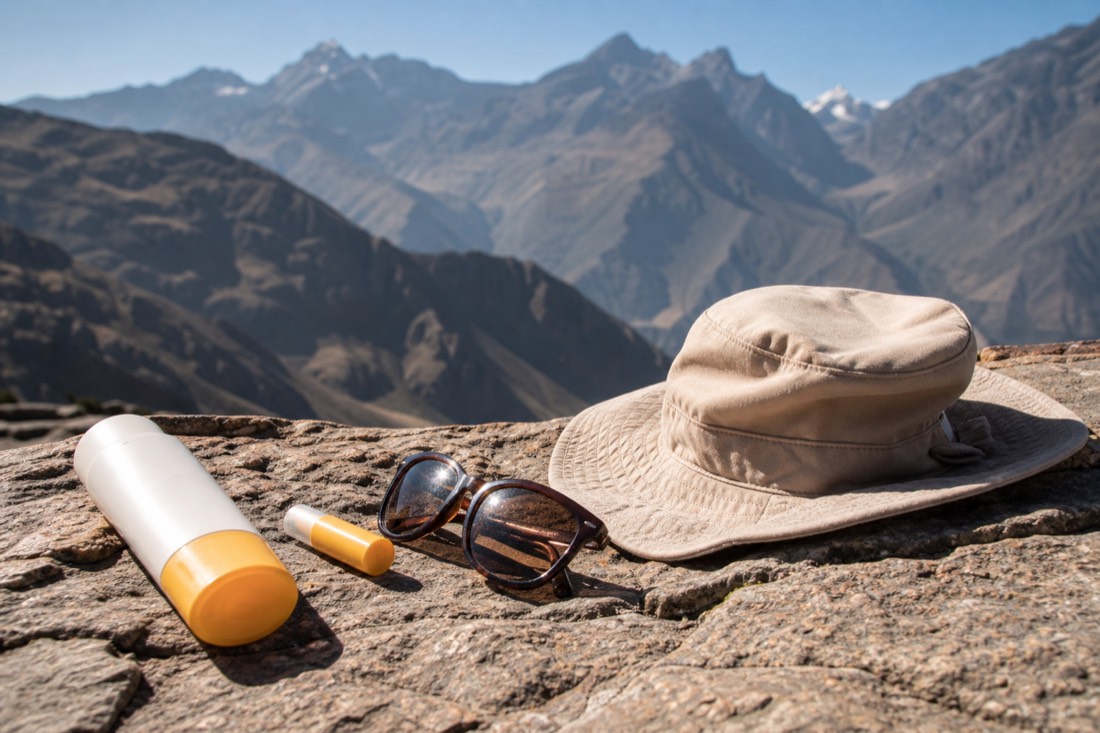
So in the pack: broad-spectrum SPF 30 plus, in a small tube I can reach without stopping, applied before the trailhead and again at the shore. Real sunglasses, the kind that block properly, because glacier light bounces off water and pale rock into your eyes from below. The brimmed hat earns its place here too. Ears, neck, and the backs of hands are the spots visitors always miss, and the backs of hands are the ones guides always have wrecked.
So the sun kit earns more pack space than anything else its size:
| Sun-protection item | Why it earns its place | The spot it saves |
|---|---|---|
| Broad-spectrum SPF 30 or higher | UV around Cusco hits 11, the extreme band, and climbs ~10 percent per 1,000 m | Face, ears, neck, backs of hands |
| SPF lip balm | Sun and glacier wind crack lips from both sides | Lips |
| Real UV sunglasses | Glacier light bounces up off water and pale rock | Eyes |
| Brimmed sun hat | Midday sun is strongest on the exposed middle of the climb | Scalp, face, neck |
Water, snacks, and the soles in my pocket
I carry 1.5 litres minimum and drink on a schedule, roughly a cup every half hour of climbing, because altitude dehydrates you before you feel it. Cash comes along in small soles notes: the entrance fee runs 10 to 20 soles if you are not on a tour, horses cost around 80 soles, and tips are cash-only country.
Hydration at altitude is not about thirst. Dry air and hard breathing strip water out of you invisibly, and dehydration stacks on top of soroche symptoms until you cannot tell them apart. The wilderness-medicine rule of thumb I follow and repeat to groups is steady small doses during the effort, around 8 ounces every half hour while climbing, then more when you are down; general altitude-health guidance from the CDC's high-elevation pages backs the broader point that hydration and a slow pace are your two cheapest defences up here. Snacks: nuts, chocolate, a banana from the Mollepata shop. Nothing heroic. And a few coca leaves, which are legal, traditional, and genuinely help some people with the altitude, as I cover in the acclimatization guide.
The cash question comes up on every single departure, so here is my pocket, itemized:
| Cash item | Amount (soles) | Notes |
|---|---|---|
| Entrance fee | 10 to 20, reports up to 30 | Community checkpoint fee; it changes; paid separately in cash; excluded by the featured tour |
| Horse at Soraypampa | ~80 one way | Paid on site, not operator-managed; horses stop 15 to 20 min short of the lake |
| Tips | Whatever feels right | Guide and driver; there is no card machine on a mountain |
| Small buys | 10 to 20 | Bathroom stops, snacks, coca leaves in Mollepata |
Small notes matter more than the total. A 100-soles bill at a trailside bathroom is a negotiation, not a payment. I covered the whole horse question, including who should genuinely take one, in the horse decision at Soraypampa.
What stays in the van, and what the tour already covers
Half of good packing is subtraction. On the featured departure, meals, first aid, an emergency oxygen bottle and an optional wooden walking stick are provided; entry is extra, so your daypack only has to cover the two hours on the trail, not the whole day.
The van is your base camp on wheels, and I treat it that way. A change of dry socks and shirt lives there for after the descent, along with anything valuable I do not want bouncing up a mountain. The optional walking stick surprises people; the descent is where knees complain, and the stick earns its keep going down, not up.
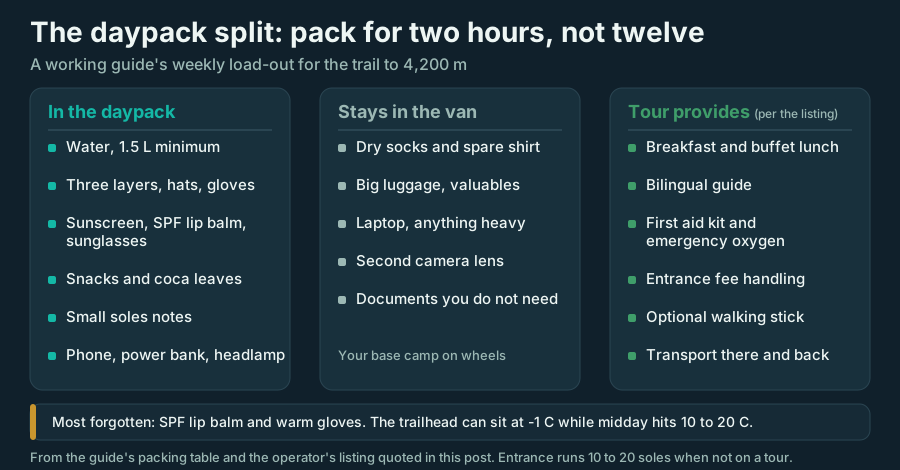
The three-column version of my whole philosophy:
| Goes in the daypack | Stays in the van | Already provided (per the listing) |
|---|---|---|
| Water, 1.5 L minimum | Dry socks and spare shirt | Breakfast and buffet lunch |
| Three layers, hats, gloves | Leave big luggage and valuables at the hotel | Bilingual guide |
| Sunscreen, lip balm, sunglasses | Laptop, anything heavy | First aid kit and emergency oxygen |
| Snacks, entry money in cash | Second camera lens you will not use | — |
| Small soles notes | Travel documents you do not need | Optional wooden walking stick |
| Phone, power bank, headlamp | Transport there and back |
The two things first-timers always forget
Lip balm with SPF and warm gloves. Every week someone hits the shore with burned, cracked lips and hands too cold to work their phone. Both items weigh nothing, cost little in any Cusco pharmacy, and fix the two complaints I hear most at 4,200 metres.
The lips first. Altitude sun and glacier wind work on them from both sides, and regular sunscreen is unpleasant to put on your mouth, so people skip it. By the van ride home their lips are cracked, and the damage follows them around Cusco for days. A stick of SPF lip balm ends the problem completely. I keep two, because I keep giving mine away.
The gloves are the sneakier one. Visitors check the forecast, see daytime highs near 20 C, and conclude gloves are for winter. Then they stand in the glacier wind at the shore trying to take photos, and within ten minutes their hands are the coldest part of their whole body. Early starts make it worse; the trailhead can sit at or below freezing when you step out of the van. Thin fleece gloves are enough. You will wear them for ninety minutes and be grateful for every one of them. My full clothing rundown, including footwear, is in the packing guide.
That is the whole bag. Nothing in it costs serious money, and nothing in it is optional after you have watched enough cold hands and cracked lips at the shore. Pack it the night before, put the alarm across the room, and let the mountain handle the rest of the drama. It always does.
Your next step
Choose your day from Cusco
Match the trip to your plans · compare costs
Compare your own quotes
Enter two totals for the same party and currency, including entry, meals, transport and any horse costs. These are your estimates, not live prices.
General recommendation · confirm your own requirements
Humantay Lake with breakfast and buffet lunch
Have a date in mind? Let one booking cover the ride to Soraypampa, your guide and both meals. Check your departure before arranging the rest of your trip.
12–13.5 hours · Transport, English/Spanish guide, breakfast and buffet lunch, first aid and emergency oxygen. Entrance fee and optional horse are extra, paid locally in cash.
Choose the historic-center pickup option and confirm your hotel; other options use a meeting point. Downtown Cusco drop-off.
A steep high-altitude hike. Not suitable for pregnancy, mobility or respiratory limitations, vertigo or low fitness. A horse does not remove the walking or altitude requirements. Free cancellation until 24 hours before departure.
Affiliate links: we may earn a commission if you book, at no extra cost to you.