What Does Humantay Mean, and Why Is the Lake Sacred?
The lake is not just a photograph. To the communities below it is a living shrine, and the name itself carries an old story.
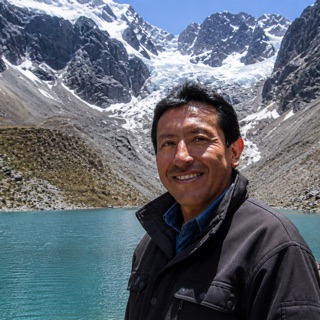 Written with Carlos Mamani, Humantay Lake tour guide & high-altitude specialist
Short answer
Humantay is usually translated as sacred head or head of the gods: uma means head in Quechua, though the ending is less certain. The mountain is an Apu, a protective spirit, and its lake is sacred and feeds communities below. That is why visitors leave stone offerings and why swimming is prohibited.
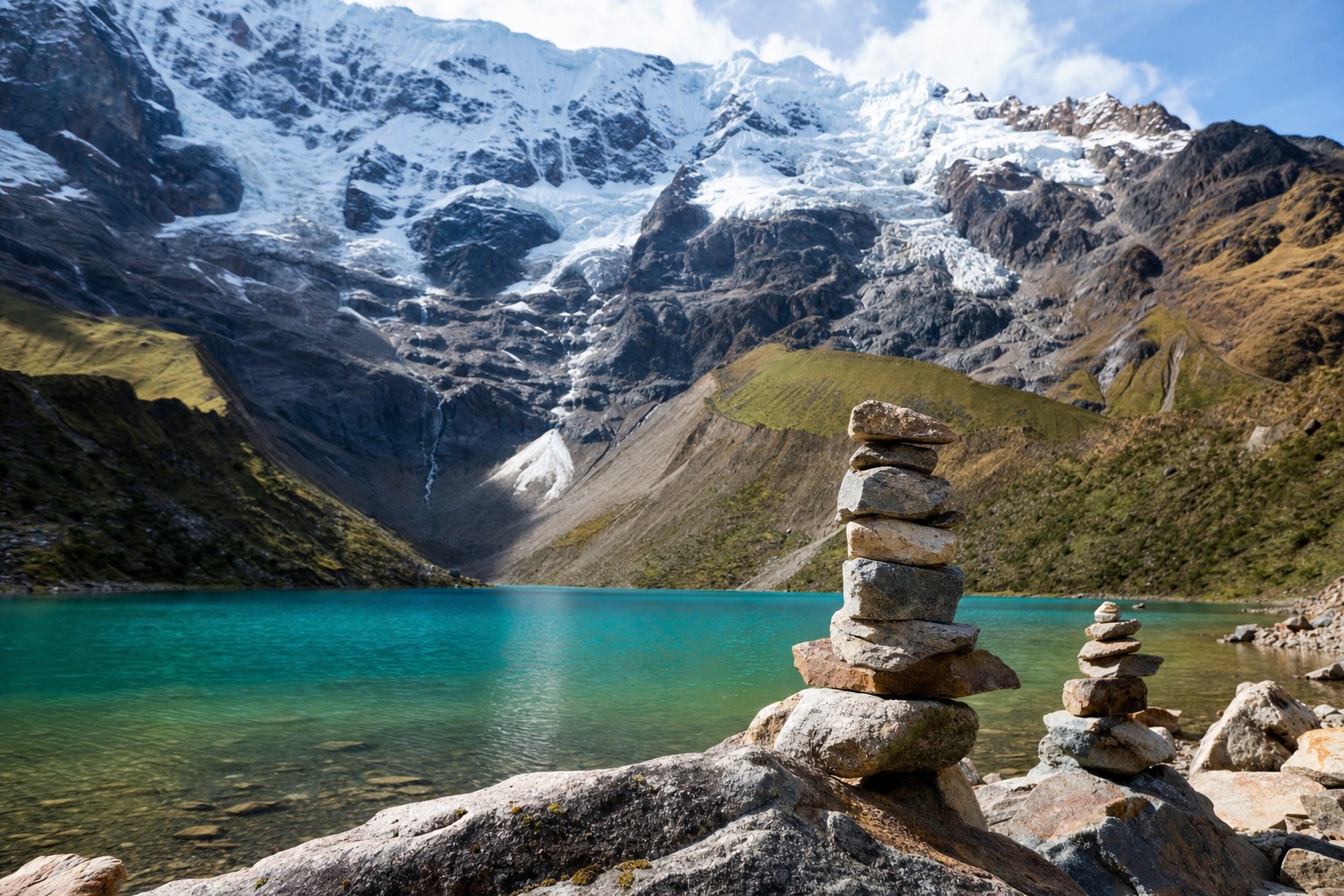
At the shore, once the cameras slow down, I always point out the small towers of stacked stones scattered along the waterline. Someone in the group usually assumes tourists built them for photographs. Then I explain what an apacheta is, and who the mountain above us is, and the whole place changes shape in front of them. The water stops being a colour and becomes a story. This page is that story, told the way I tell it on the trail: what the name means as far as anyone can honestly say, why the mountain is treated as a living being, and why nobody, ever, swims here.
Booking choice: See the turquoise lake and glacier on the guided route. Check Humantay Lake dates
Affiliate recommendation · final price and options on GetYourGuide.What does the name Humantay actually mean?
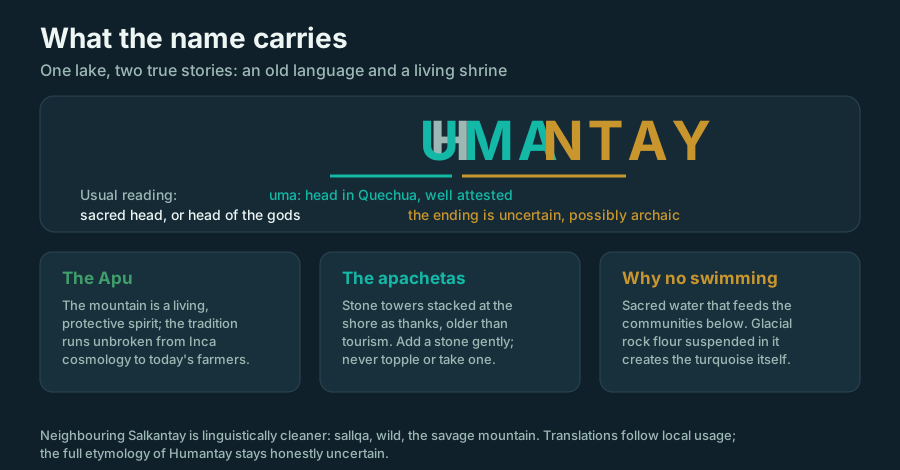
The most common translation is sacred head or head of the gods. The first element is solid: uma means head in Quechua, and can mark something first or most important. The ending, tay, is harder, and honest sources admit the full etymology may be archaic or older than Quechua itself.
I want to be straight about the limits of what is known, because plenty of tour patter presents guesses as fact. The uma root is not in dispute. Quechua speakers across the region use it for head, and by extension for a summit or a source, the head of a thing. Applied to a 5,470 m peak that feeds the valley below, the logic is easy to feel.
The suffix is where certainty runs out. Some render the whole name as head of the gods, others as sacred head, and researchers note the ending resists a clean Quechua reading and may come down from an older language layer in these valleys. Andean place names often work like that: worn smooth by centuries of use until the original grammar is half lost.
The neighbouring giant offers a cleaner example. Salkantay comes from sallqa, wild or untamed, and is usually translated as the savage mountain, a name any climber who has seen its weather will endorse. The two peaks stand side by side in local tradition as they do on the skyline.
| Name | Common translation | What is actually verified |
|---|---|---|
| Humantay | Sacred head, head of the gods | Uma, head, is solid Quechua; the tay ending is uncertain, possibly archaic |
| Salkantay | Savage or wild mountain | Sallqa, wild or untamed, is well attested |
| Soraypampa | The plain below the trailhead | Pampa, plain or flat ground, is standard Quechua; the first element is less documented |
| Apu | Lord, revered mountain spirit | Core, well-documented Andean concept, in use today |
What is an Apu, and why is Humantay one?
An Apu is a mountain understood as a living protective spirit, a lord of the landscape that watches over the people, animals and water below it. The tradition runs from Inca cosmology straight into the present, and communities in these valleys regard both Humantay and Salkantay as powerful Apus.
This is the piece visitors most often miss, because nothing about it is a museum exhibit. The Apu tradition is current practice. Farmers in Mollepata still make offerings for the health of their animals. Guides, drivers and porters raised in these valleys will quietly greet the mountain, and many of us were taught that the Apu notices how you behave on its slopes.
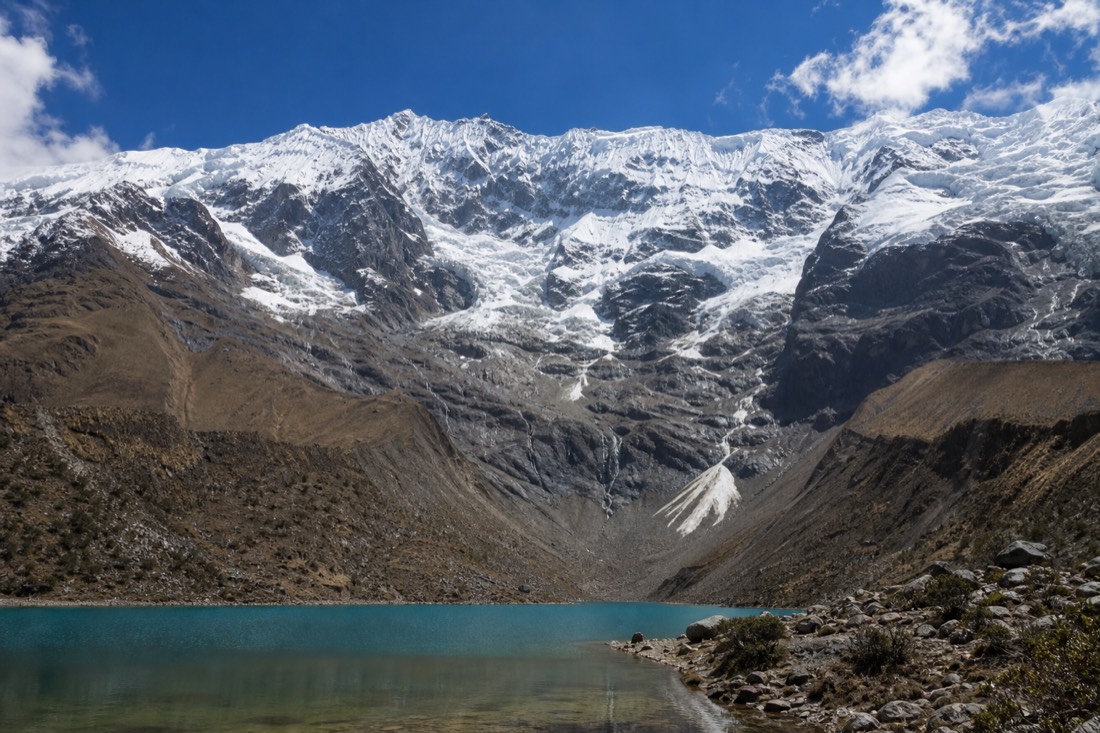
In the old cosmology every prominent peak had its rank and its personality, and the greatest of them ordered the life of whole regions. Snow peaks carried special weight because they store and release the water everything else depends on. A glacier, in this way of seeing, is not scenery. It is the Apu's generosity made visible, melting into the streams that fill the irrigation channels far below.
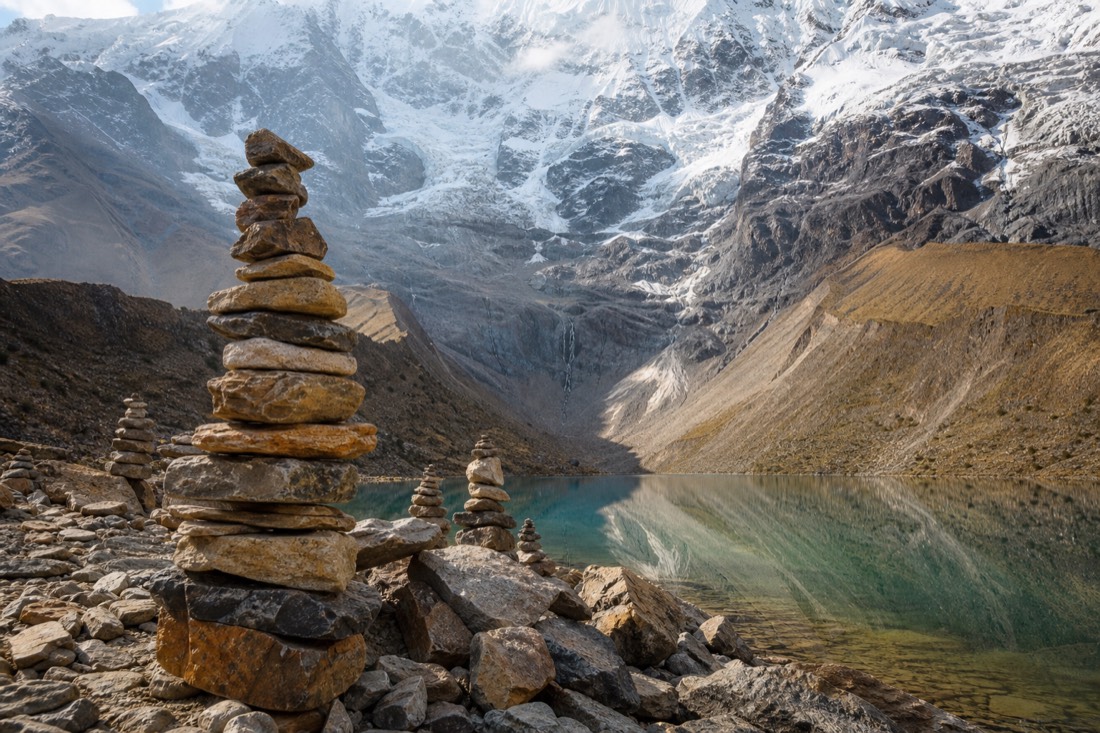
Humantay's lake concentrates all of that in one place. Glacier, mountain and water meet in a natural amphitheatre, which is exactly the kind of site Andean tradition treats as charged. When I brief a group at Soraypampa, I put it simply: we are visiting someone's shrine, and it happens to be beautiful. Guests who carry that framing up the trail tend to stand at the shore a little differently.
What are the stone cairns and offerings at the shore?
The small stone towers are apachetas, built stone by stone as acts of gratitude and respect, a practice that long predates tourism. Locals and visitors also make offerings to Pachamama, Mother Earth, from simple coca leaves to guided despacho ceremonies. Adding a stone respectfully is welcome; knocking towers over is not.
An apacheta is the humblest form of Andean devotion: you carry a stone, you place it, and the small effort stands for your thanks, a safe arrival, or a wish left in the mountain's keeping. Passes and sacred sites across the Andes have gathered them for centuries. At Humantay the shoreline clusters grow and shrink with the seasons, rebuilt by new hands after every windstorm.
The fuller ceremony is the despacho, an offering bundle assembled from coca leaves, seeds, sweets and symbolic items, dedicated to Pachamama and the Apus and then buried or burned. Some Cusco operators arrange small despacho ceremonies at the lake with local practitioners, and travellers often describe them as the moment the trip became about more than photographs. I have watched guests weep quietly through one. Nobody plans for that.
If you want to take part, the etiquette is short. Place your stone gently and build small. Never dismantle or topple an existing apacheta, and never pocket stones from one as souvenirs. Coca leaves are a fitting offering; wrappers, coins and trinkets are litter with good intentions. I tell the full story of a shoreline ceremony in my post on offerings and apachetas.
Why is swimming in the lake prohibited?
Because the lake is sacred to the communities that live below it, and because it is their water source. Entering the water is treated as a serious offence against both the Apu and the people who drink from these streams, and the rule also protects a fragile glacial ecosystem and the colour itself.
The prohibition is the point where culture and plain practicality agree completely. On the sacred side, wading into an Apu's lake reads roughly the way wading into a cathedral font would: not adventurous, just disrespectful. On the practical side, this glacial meltwater flows down to communities that use it, so keeping sunscreen, skin oils and general human mess out of it is basic decency.
There is a third reason you can see with your own eyes. The turquoise depends on fine sediment resting undisturbed in cold, still water, and the shoreline ecosystem at this altitude repairs itself slowly. A few swimmers a day would do real damage over a season.
And truthfully, nobody is missing much. The water sits barely above freezing all year. The rule is posted, guides repeat it, and in my seasons on this trail I have almost never seen anyone test it. The full detail, including what happens at the shore in practice, is in the can you swim guide.
| At the shore | Welcome | Not welcome |
|---|---|---|
| Apachetas | Adding a stone gently, building small | Toppling towers, taking stones away |
| Offerings | Coca leaves, a quiet moment, a guided despacho | Coins, wrappers, food, anything that stays as litter |
| The water | Photographs, sitting nearby, filtering none of it | Swimming, wading, washing hands, filling bottles |
| Sound | Conversation, ceremony | Speakers and shouting, which carry far across the water |
| The trail | Staying on the marked path | Cutting switchbacks, climbing toward the glacier |
Where does the turquoise colour come from?
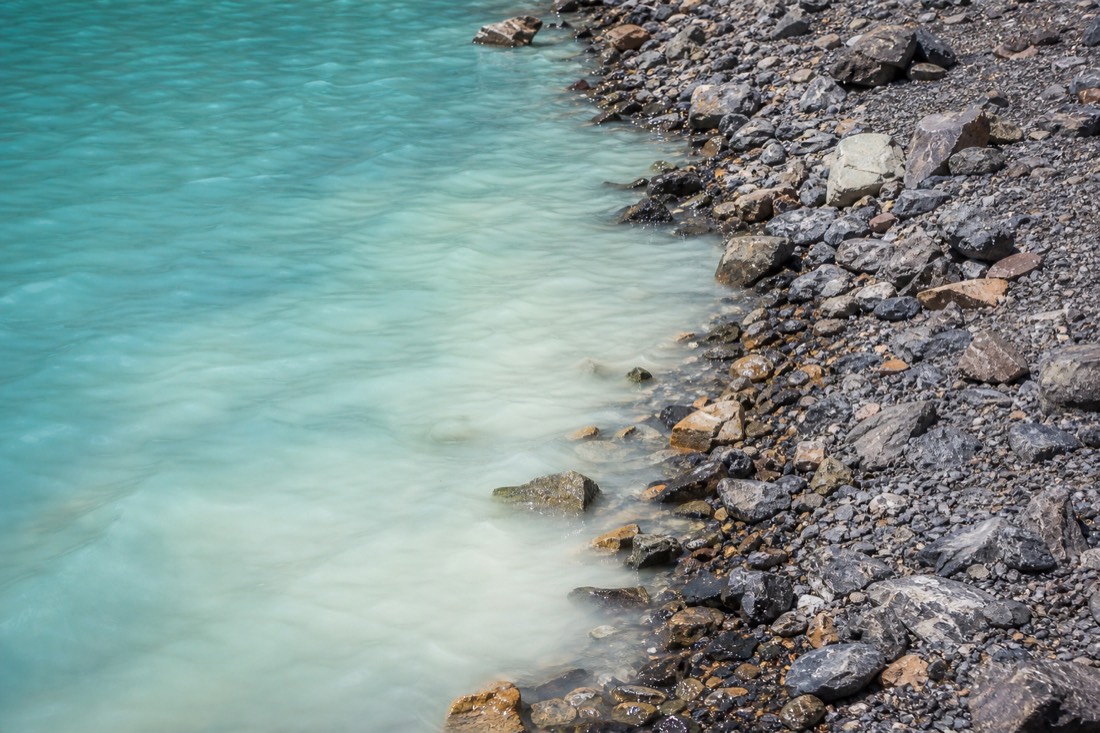
From the glacier itself. Meltwater grinds the rock beneath the ice into a powder called rock flour, whose microscopic particles stay suspended in the lake and scatter sunlight toward green and turquoise. The colour is strongest in bright midday light and shifts with season, cloud and sediment load.
The mechanism is pure physics wearing a mystical costume. As the glacier above Humantay Lake creeps downhill, its weight mills the bedrock into particles finer than dust. Meltwater carries this rock flour into the basin, where the particles are too small to sink quickly. Sunlight entering the water strikes them and scatters, and the wavelengths that bounce back to your eye sit in the green-blue band. More flour, more scatter, more colour.
That is why the lake has moods. After storms, fresh sediment can turn it milky. Under flat grey cloud the scatter has little light to work with and the water goes slate. On a clear late morning, with the sun high and the surface calm, it burns the colour into your memory. Photographers should read my notes on shooting the turquoise before deciding what lens to carry.
| Conditions at the shore | What the water looks like | Why |
|---|---|---|
| Clear sky, late morning | The vivid turquoise of the photographs | High sun gives the rock flour maximum light to scatter |
| Flat grey cloud | Muted slate green | Little direct light reaches the suspended particles |
| Just after heavy rain | Milky, paler | Fresh sediment washed in, more flour than usual in suspension |
| Dry season, May to September | Most reliably vivid | Stable clear mornings and settled sediment |
| Rainy season, October to April | Hit or miss | Cloud, stirred sediment and rain squalls change it hour to hour |
I like telling groups both stories at once at the shore. The optics explain how the colour happens. The Apu explains what it has meant to the people here for centuries. You do not have to choose between them, and the lake is richer if you hold both.
What do I find visitors misunderstand about this place?
Three things, mostly: that tourists stacked the shoreline cairns for photographs, that a quick dip would be harmless, and that the turquoise comes from some mineral dissolved in the water. All three are wrong, and every correction is more interesting than the myth it replaces.
I have been briefing groups at Soraypampa and the shore since 2022, and the same gentle misreadings surface almost every week. They are not foolish. They are the reasonable guesses of people meeting the place for the first time, with no reason yet to know that the little stone towers are devotional or that the colour is a trick of suspended rock rather than chemistry. My favourite part of the walk is watching a guess get replaced by the real thing, because the real thing is always stranger and better.
The cairns are the clearest example. Left unexplained, they look like the kind of stacked stones hikers build anywhere for a photo. Named as apachetas, offerings placed in gratitude for a safe arrival, they turn the whole shoreline into something closer to a quiet chapel. The swimming misunderstanding is the one I head off earliest, because the water looks so inviting and the reasons not to enter it are not obvious until you know the lake feeds the communities below and is held sacred above. I unpack that fully in the can you swim guide.
The table below gathers the corrections I make most often, side by side with the assumption they replace.
| What visitors often assume | What is actually true |
|---|---|
| Tourists built the shore cairns for photos | They are apachetas, offerings stacked in gratitude, a practice older than tourism |
| A quick swim would not hurt | Entering the water is prohibited: sacred, a community water source, and fragile |
| The colour is dye or a dissolved mineral | It is suspended glacial rock flour scattering light, nothing dissolved |
| The name's meaning is settled | The head element is solid; the full etymology is genuinely uncertain |
| The Apu belief is a museum relic | It is living practice; local families still make offerings today |
What ties these misreadings together is that the lake hands you no signage to correct them. There is no interpretive centre at the shore, no plaque explaining the apachetas or the reason the water is off limits. The knowledge travels by voice, from guides and drivers and the families of Mollepata, which is one honest argument for walking up with someone who carries it. Left alone with the view, most visitors invent a plausible story. Walked up with the context, they get the true one, and the true one is stranger and better than any guess.
How solid is each proposed meaning of the name?
Solid at the front, shaky at the back. The first element, uma or huma, is well-attested Quechua for head, and by extension a summit or a source. The endings that turn it into sacred head or head of the gods are where honest sources hedge, because the suffix resists a clean Quechua reading and may come down from an older language layer.
I try to be careful here, because names carry an authority they have not always earned, and a confident guide can turn a scholarly guess into a repeated fact within a season. What can be said plainly is the root. Quechua speakers across the region use uma for head, and the extension to a summit or the source of a river is natural, which fits a 5,470 m peak that feeds the valley beneath it. That much stands on firm ground.
The rest is where I use words like probably and some say. The readings you will hear on the trail, sacred head or head of the gods, are reasonable and widely repeated, but they lean on interpreting an ending that does not parse cleanly in modern Quechua. Serious sources allow that the suffix may be archaic, or older than Quechua itself, worn smooth by centuries the way many Andean place names have been. Uncertainty is not a failure of the story. It is part of it.
Set the competing readings out honestly and the pattern is easy to see: the closer a claim sticks to the head root, the safer it is.
| Proposed reading | What it rests on | How solid |
|---|---|---|
| "Head" at the core | Uma or huma is standard Quechua for head, summit or source | Well attested |
| "Sacred head" | The head root plus a sacred sense read into the ending | Common, partly interpretive |
| "Head of the gods" | The same root with the ending read as "of the gods" | Popular, not linguistically settled |
| A pre-Quechua origin | The suffix fits no clean Quechua grammar | A genuine possibility scholars raise |
It helps to know the handful of words that carry this story, because guides, drivers and ceremony leaders use them without translation. Here is the short glossary I wish every visitor had before the shore.
| Word you will hear at the shore | What it means | Note |
|---|---|---|
| Apu | A mountain revered as a living protective spirit | Living tradition, well documented |
| Apacheta | A stacked-stone cairn left as an offering | An ancient practice across the Andes |
| Despacho | An offering bundle for Pachamama and the Apus | Sometimes arranged at the lake |
| Pachamama | Mother Earth | A central Andean deity |
| Uma | Head, and by extension summit or source | The solid root inside Humantay |
| Sallqa | Wild, savage, untamed | The root of neighbouring Salkantay |
A last word on why the uncertainty is worth sitting with rather than papering over. These high valleys have been named and renamed across Quechua, Aymara and older tongues now largely lost, so a worn-down suffix is less a hole in the record than a fingerprint of that long history. When I tell a group the ending cannot be pinned down, I am not confessing ignorance. I am handing them the more truthful version of the name, and, to my ear, the more interesting one, a word that still keeps part of its own story to itself.
How do you visit a sacred lake respectfully?
Come with a guide who tells the story, stay out of the water and on the marked trail, keep offerings natural and small, pack out everything you carried up, and give the shore some quiet. Respect here is mostly restraint, and it costs you nothing but adds weight to the visit.
None of this requires ceremony from you. The communities do not expect visitors to share their beliefs, only to behave like guests. In practice that means the table above: no swimming, no toppled apachetas, no litter dressed up as an offering, no shortcuts carved into the slope. Add one quiet minute at the shore without your phone. Whatever you believe, the place earns it.
A guide changes the visit more than any packing choice. Walking up with someone who can name the Apu, explain the despacho and answer the questions this page has probably raised turns a viewpoint into a meeting. The tour this site features runs with bilingual guides who carry that context, alongside breakfast, lunch and the practical safety kit.
The mountain was sacred long before the first van left Cusco in the dark, and it will stay sacred long after we are all done photographing it. Visit like that is true, because it is.
Your next step
Choose your day from Cusco
Match the trip to your plans
General recommendation · confirm your own requirements
Humantay Lake with breakfast and buffet lunch
Have a date in mind? Let one booking cover the ride to Soraypampa, your guide and both meals. Check your departure before arranging the rest of your trip.
12–13.5 hours · Transport, English/Spanish guide, breakfast and buffet lunch, first aid and emergency oxygen. Entrance fee and optional horse are extra, paid locally in cash.
Choose the historic-center pickup option and confirm your hotel; other options use a meeting point. Downtown Cusco drop-off.
A steep high-altitude hike. Not suitable for pregnancy, mobility or respiratory limitations, vertigo or low fitness. A horse does not remove the walking or altitude requirements. Free cancellation until 24 hours before departure.
Affiliate links: we may earn a commission if you book, at no extra cost to you.